
Note taking methods for students to improve memory, stay organized, and study effectively. Learn smart techniques for better academic success.
Introduction-Note taking methods for students
Read More About Management Tips
Taking notes is something every student does, but not every student does it effectively. Many students write down everything they hear or read, yet struggle to understand or remember the information later.
The truth is, good notes are not about writing more — they are about writing smarter. Using the right techniques can help you capture key ideas, stay organized, and revise faster.
In this guide, you’ll discover the best note-taking methods for students that can improve your learning, boost memory, and make studying more efficient.

Why Note Taking Methods for Students Matters More Than You Think
Note taking methods for students is not just about recording information. It is an active learning process that helps your brain understand and retain knowledge.
Effective note-taking can:
– Improve concentration during lectures or study sessions
– Help you organize information clearly
– Make revision faster and easier
– Increase long-term memory retention
– Reduce study stress before exams
Students who take structured notes often perform better because they spend less time re-learning content.
Common Note-Taking Mistakes Students Make
Read More About Study Techniques
Before learning better methods, it’s important to avoid common mistakes:
– Writing everything without understanding
– Using messy or unorganized formats
– Not reviewing notes regularly
– Copying directly from books or slides
– Ignoring keywords and main ideas
Fixing these habits can instantly improve your note quality.
7 Best Note Taking Methods for Students
1. The Cornell Method
This is one of the most popular and effective note-taking systems. Divide your page into three sections:
– Main notes area
– Cue column (for keywords/questions)
– Summary section
This method helps with both understanding and revision. After class, you can quickly review key points using the cue column.
2. The Outline Method
This method organizes information in a structured, hierarchical format using headings and bullet points.
Example:
– Main Topic
– Subtopic
– Key point
It is perfect for subjects that require logical understanding, such as history or science.
3. The Mind Mapping Method
Mind maps are visual diagrams that connect ideas around a central topic.
This method is useful for:
– Visual learners
– Brainstorming ideas
– Understanding relationships between concepts
It makes complex topics easier to remember.
4. The Charting Method
This method uses tables to organize information. It works well when you need to compare data.
Example:
Topic| Key Points| Examples
It is especially useful for subjects like business, biology, or economics.
5. The Sentence Method
In this method, you write each point as a separate sentence. It is simple and useful when information is presented quickly.
However, it may require editing later for better organization.
6. The Boxing Method
Here, you group related information into boxes. Each box contains a specific concept or topic.
This method works well for digital note-taking and keeps information visually organized.
7. Digital Note-Taking
Using apps or devices to take notes is becoming more popular.
Benefits include:
– Easy editing and organizing
– Access from multiple devices
– Search functionality
However, make sure you stay focused and avoid distractions.
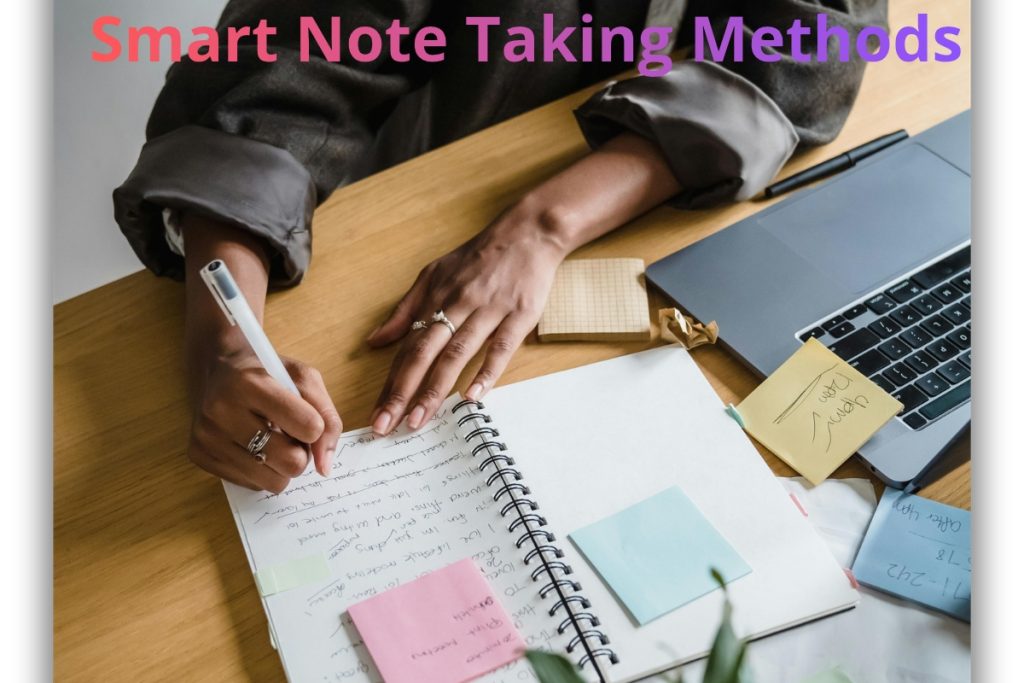
How to Choose the Right Method-Note taking methods for students
Not every method works for everyone. Choosing the right method will depend on your learning style.
– If you prefer structure → Outline method
– If you are a visual learner → Mind maps
– If you need quick notes → Sentence method
– If you want better revision → Cornell method
Try different methods to find out what works best for you.
Tips to Take Better Notes
Even the best method won’t work without good habits. Follow these tips:
– Focus on key ideas, not every word
– Use your own words
– Highlight important points
– Keep notes clean and organized
– Review notes within 24 hours
Simple habits can make a big difference.
Paper vs Digital Notes: Which is Better?
Both methods have advantages:
Paper Notes:
– Better for memory retention
– Fewer distractions
Digital Notes:
– Easy to organize and edit
– Accessible anywhere
The best option depends on your preference. Some students even combine both.
How to Review Notes Effectively
Taking notes is only half the process. Reviewing is equally important.
– Revise notes regularly
– Test yourself using your notes
– Summarize key points
– Teach someone else
This helps transfer information into long-term memory.
Final Thoughts about Note taking methods for students
Good note-taking is a skill that improves with practice. You don’t need to follow a perfect system from the beginning. Start simple to maintain consistency and improve over time.
Smart notes save time, reduce stress, and make studying more effective.
Conclusion
The best note-taking methods for students are those that help you understand, organize, and remember information efficiently. By choosing the right method and building strong habits, you can transform the way you study and achieve better academic results.
Q1: What is the best note-taking method for students?
The best method depends on your learning style, but the Cornell method and mind mapping are widely effective for understanding and revision.
Q2: Is digital note-taking better than paper?
Both have advantages. Paper improves memory retention, while digital notes are easier to organize and access.
Q3: How can I take notes effectively while studying?
Focus on key points, use your own words, and organize notes with headings and bullet points for better clarity.
Q4: How often should I review my notes?
Review your notes within 24 hours and revise regularly to improve long-term memory.